US Government Suspends Technology Visa Program: Legal Shock For Microsoft And The Artificial Intelligence Industry
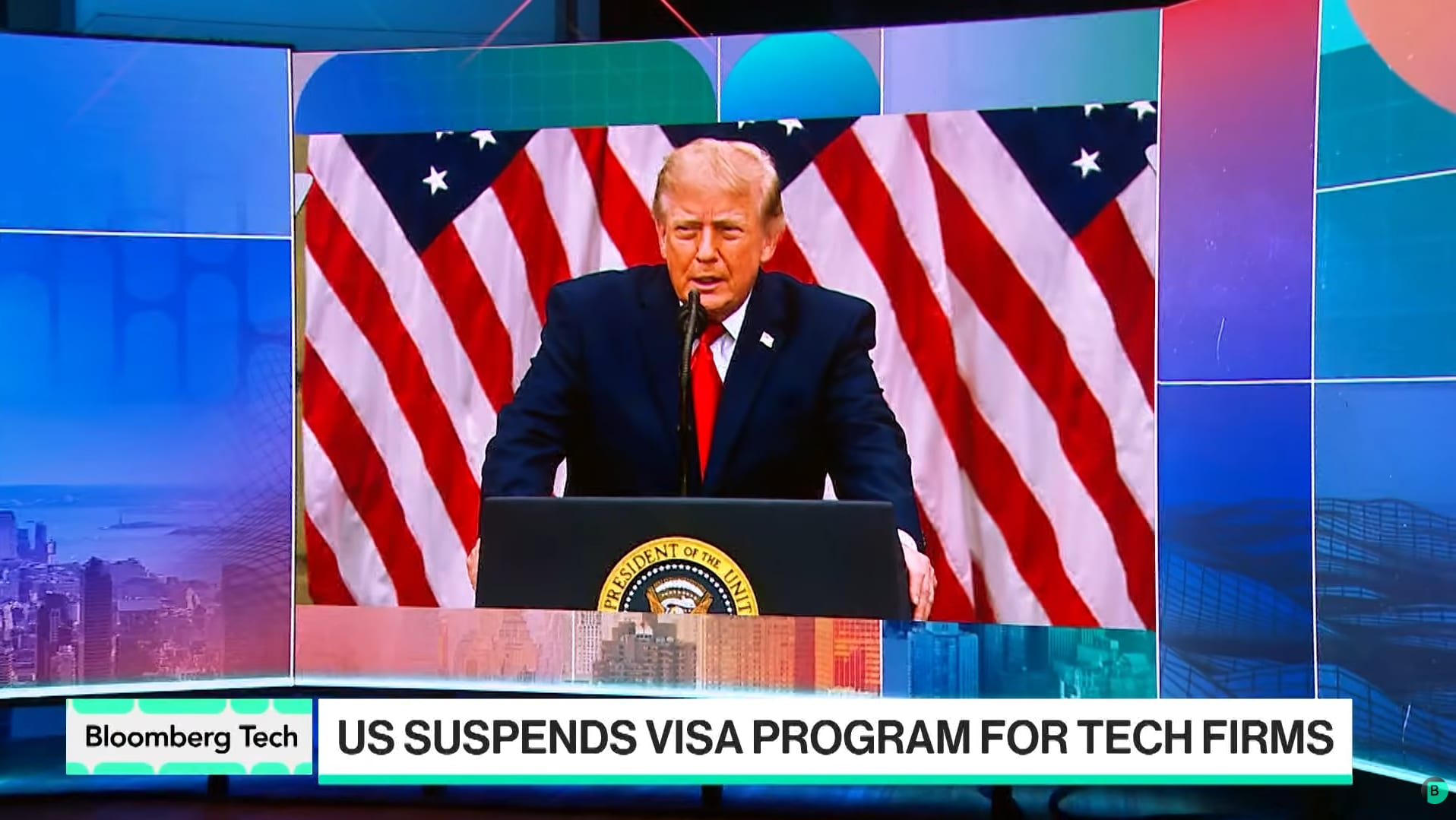
The US technology market has just experienced a serious legal upheaval as the federal government officially announced the suspension of the Permanent Resident Certification Program (PERM) for a number of leading technology companies. The PERM program is a crucial "ticket" for businesses to sponsor green cards for foreign engineers. Authorities stated that this decision was based on allegations of serious abuse within the certification system.
Vice President JD Vance directly named Microsoft as the biggest violator of regulations. According to government figures, Microsoft laid off 6,000 US employees last year, but simultaneously filed 6,000 new H-1B visa applications and 3,700 PERM applications. The suspension order not only applies to Microsoft but also directly impacts other software and outsourcing giants such as Adobe, Cognizant, Infosys, Wipro, HCL, and Capgemini. Simultaneously, the US government is expanding its investigation into the J-1 visa application process at nine prestigious universities (including Harvard, MIT, and Stanford).
This event created a major paradox in terms of media and government relations. On the very same day the suspension order was issued, the US President held a ceremony at the White House to award the National Medal of Technology and Innovation to Microsoft CEO Satya Nadella. The ceremony also honored other leaders such as Elon Musk (SpaceX), Jensen Huang (Nvidia), and Michael Dell.
These political developments are unfolding against a backdrop of Wall Street investors expressing skepticism about the profitability of the "AI craze." Although two Asian hardware giants, Samsung and TSMC, recently reported outstanding earnings – with Samsung's profits increasing ninefold and TSMC's revenue rising 51% – technology stocks (especially the NASDAQ 100 index) have still seen a downward correction. Financial analysts are concerned that the rate of increase in capital expenditures (Capex) for AI data centers is too high and unlikely to sustain such rapid growth in the long term.
In the private equity market and IPOs, the macroeconomic risks of AI are also beginning to be carefully quantified. Startup Anthropic is attracting investor attention by considering including the risk of "AI getting out of control and threatening humanity" in its IPO prospectus, creating an unprecedented risk pricing problem. Nevertheless, venture capital continues to flow strongly into practical AI models. A prime example is the startup Hone, which recently successfully raised $60 million in a Seed round to develop AI agents capable of automating entire end-to-end workflows, rather than just handling individual tasks like previous chatbot generations.
Reference sources: (2) AI Spending Questions Persist as Washington Targets Tech Visas - YouTube | Bloomberg Tech