Tech News: Meta's Humanoid Robot Gamble and the Polarized Debate Over the Future of AI at Home
Meta's ambition to bring AI to real life
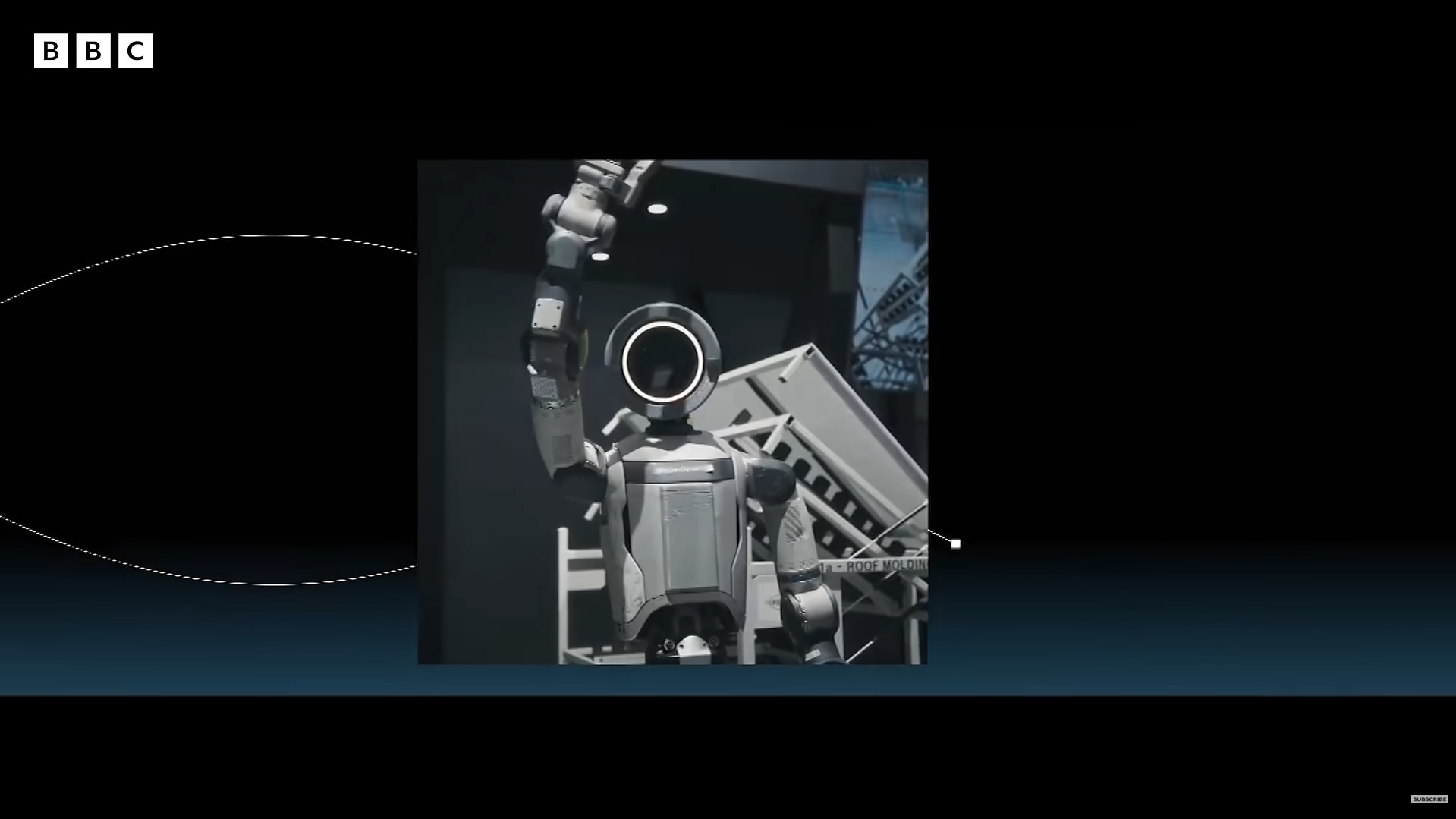
Giant technology corporations (Big Tech) are currently pouring hundreds of billions of dollars into artificial intelligence (AI) infrastructure, and for this investment to be profitable, many people believe that AI must leave flat screens to enter the real world. According to a report from the BBC, Meta just made a strategic move when it sent a team of engineers to Shanghai (China) to work at the factory of a company specializing in manufacturing robots. The result of this two-month trip was the birth of "Max" - a humanoid robot prototype built by Meta in just 3 months. Currently, Meta is continuing to develop the second version of Max with a significantly improved sensor system and hands. The vision of this project is to turn the Max robot into a perfect "physical body" to contain Muse - the omnipotent AI assistant system that Meta is developing. However, the question is: Is placing an AI-integrated robot in the home or workplace an inevitable step of the future, or just the riskiest gamble ever of the technology world? Skepticism from critics: The fatal flaw of the Large Language Model
Not everyone is excited about the prospect of Meta's robot walking around the house. Ed Zitron, a notorious technology critic and host of the Better Offline podcast, has strongly criticized the project. He called this a trick to deceive the media and investors, making them believe that Meta is doing something greater than the true nature of a social networking platform specializing in targeted advertising. He pointed out that Meta used to have a "graveyard" full of failed projects and acquisitions, and that hardware products such as Meta smart glasses or the current AI Muse project are causing the company heavy losses. Going deeper into technical issues, Zitron warns of fatal risks when combining AI with physical robots. Large Language Models (LLMs) are inherently probabilistic, and even OpenAI admitted last October that these systems "must hallucinate" mathematically. Using an error-prone system to control a physical machine is extremely dangerous. He used the example of washing dishes: Humans don't just pick up the bowl to wash, but we use our ability to measure extremely delicate pressure so as not to break the bowl, tear off the sponge, or squeeze out the dishwashing liquid. These are extremely complex mechanical problems that cannot be solved by embedding an LLM model. Furthermore, human life is full of "edge cases". With just a small error due to skewed training data, the robot's brute mechanical power can smash the edge of the table or destroy furniture in the house. Indoor environments are also extremely diverse, from low-ceilinged houses in the UK to villas with ceilings up to 20 feet high in the US, not to mention the unexpected appearance of pets or children, making robot training a huge data problem. Solving space blind spots: Why do robots have to have human shapes?
From a more optimistic perspective, John Hanke, co-founder of Google Earth and currently head of Niantic Spatial, affirms that the appearance of humanoid robots is inevitable. Hanke compares current clumsy robot prototypes to primitive cell phones before the iPhone or slow dial-up internet connections: Although not yet perfect, they are glimpses of the future. Explaining why engineers try to build humanoid robots instead of simple tracked machines, Hanke points out a fact: Our entire physical world is built and designed specifically for human size and shape. From turning doorknobs, reaching for objects on high shelves, to moving in tight spaces, a machine with similar arm and leg spans to humans will be most compatible and handle the job, even though this design may not be optimal in terms of energy consumption. For these machines to operate safely, Hanke's company is building new generation 3D space maps specifically for artificial intelligence. Closing the gap between simulation and reality (Sim-to-real gap) is paramount. Instead of just regular navigation mapping, Niantic Spatial creates spatial grids capable of providing "semantic contents". The robot will be provided with advance information about the structure, shape, hardness and weight of surrounding objects. By combining Gaussian splatting (for realistic visualization) and aligned mesh (for positioning hard, safe surfaces to step on or place objects), the robot can understand how the physical world will react to its actions. A typical example of this potential is the Chinese company Agibot, when they put six humanoid robots to work at a cramped convenience store, performing tasks such as making coffee, cleaning up trash and stacking goods on shelves. Security and geopolitical barriers
The rise of smart robots also brings with it serious concerns about cybersecurity and national security. In July, the United States issued a ban on importing foreign-made humanoid robots (especially from China) due to concerns that they could be used as spy tools and intelligence gathering inside the United States. Technology expert Stephanie Hare said that this concern is completely well-founded from a cybersecurity perspective. Any device with network connectivity is at risk of being hacked and weaponized by hackers, whether for offensive or defensive purposes. She gave the example of smart refrigerator systems in Europe being attacked, causing users to lose millions of dollars in food that had to be thrown away, or the potential risk from self-driving cars being taken over. If a robot in the house with a full camera and microphone is controlled by hackers, the consequences will be extremely unpredictable. However, she also noted that the assumption that Chinese robots are more dangerous than robots manufactured in the US is more political than technological in nature. Meta's entry into the race to develop humanoid robots is sparking a debate that has no end. Whether it is a great step forward for humanity or just a ploy to attract capital, it is clear that the path to taking AI from a piece of software in a computer to a mobile entity on two legs inside our homes still has countless technical, safety and ethical obstacles that need to be overcome.