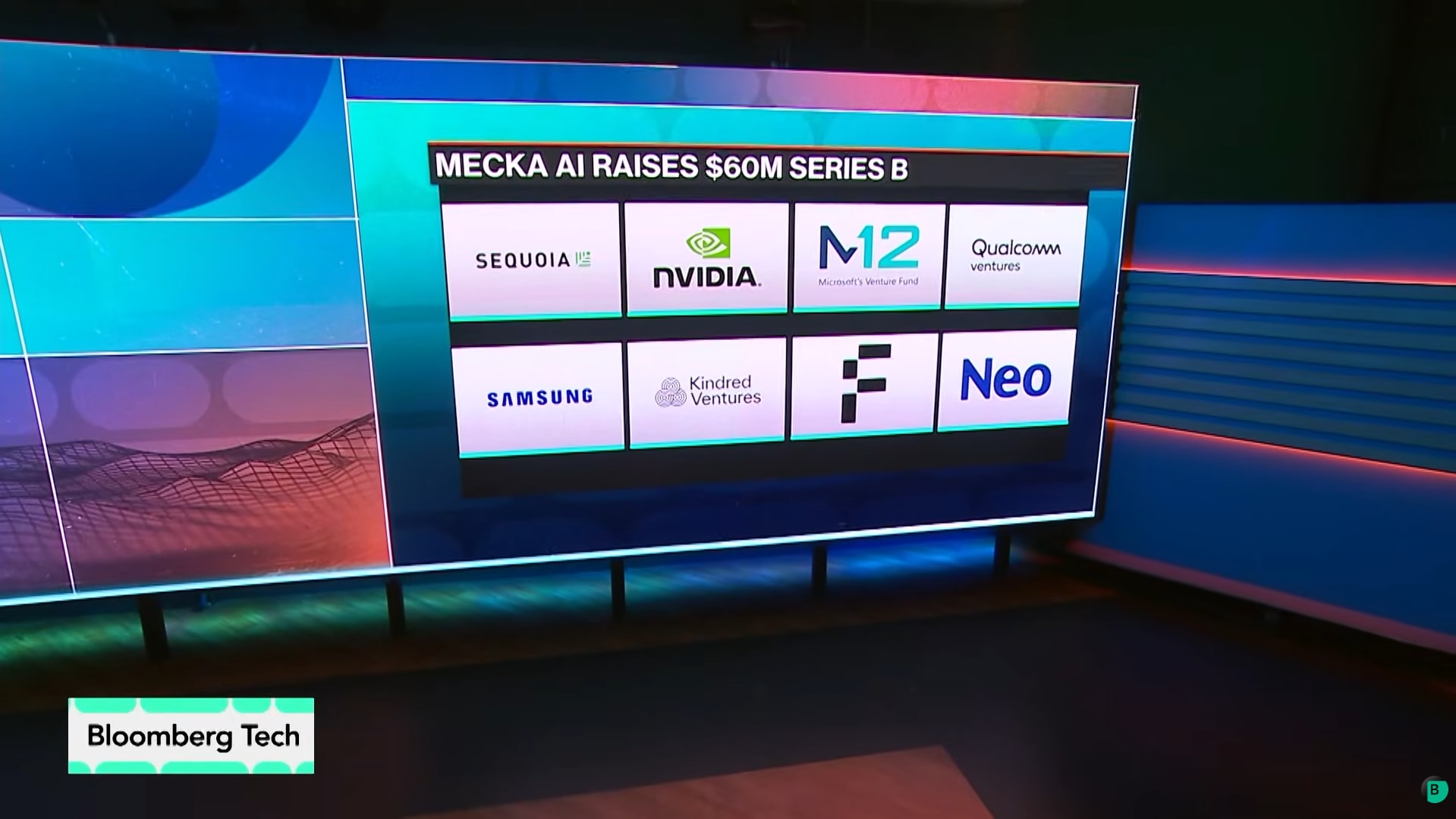
Sequoia and Nvidia Invest in Mecka AI: Decoding the "Physical Data" Problem in the Robotics Era
The robotics industry is entering the era of Deep Learning, but traditional robotic systems still exhibit a critical weakness: generalization. The real world is chaotic with billions of variables related to light, noise, and complex physical laws. To address this problem, startup Mecka AI has successfully raised significant capital from tech giants including Sequoia, Nvidia, and Tony Xu (founder of DoorDash) to focus on the most crucial element of AI: data.
Josh Gao, CEO of Mecka AI, points out the fundamental difference between virtual AI and physical AI. While systems like AlphaGo can learn independently using synthetic data because the rules of Go are fixed, the physical world cannot be perfectly simulated in a software program. For next-generation robots to interact accurately with their environment, they need real-world training data from millions of different scenarios.
To fill this data gap, Mecka AI's business model operates on three architectural layers: Hardware, Software, and Operations. At the hardware layer, where the market lacks readily available sensors, Mecka designs and manufactures its own force data sensors on a large scale. These sensors accurately collect the Newtons of force needed for robots to perform delicate tasks such as unscrewing bottle caps, opening door handles, or handling fragile objects. Operationally, the company deploys an international logistics network to collect data on all exceptional situations (Edge cases) in real life.
The biggest challenge for Mecka AI today lies in the sheer scale of the data. Gao compares it to Tesla, which took over a decade to solve the self-driving car problem with only two degrees of freedom: acceleration and steering. Meanwhile, a humanoid robot or robotic arm possesses dozens of degrees of freedom at every joint and finger, leading to an exponential increase in data.
New funding from Nvidia and Sequoia will be directly reinvested by Mecka AI in establishing a static network infrastructure (with hundreds of gigabytes of upload bandwidth in previously undeveloped areas) and attracting top hardware and operations engineers. This strategic move promises to break the data bottleneck, laying a solid foundation for the explosion of intelligent robots in the next decade.
Reference sources: (2) Sequoia, Nvidia Back Mecka AI's Robotics Push - YouTube | Bloomberg Tech