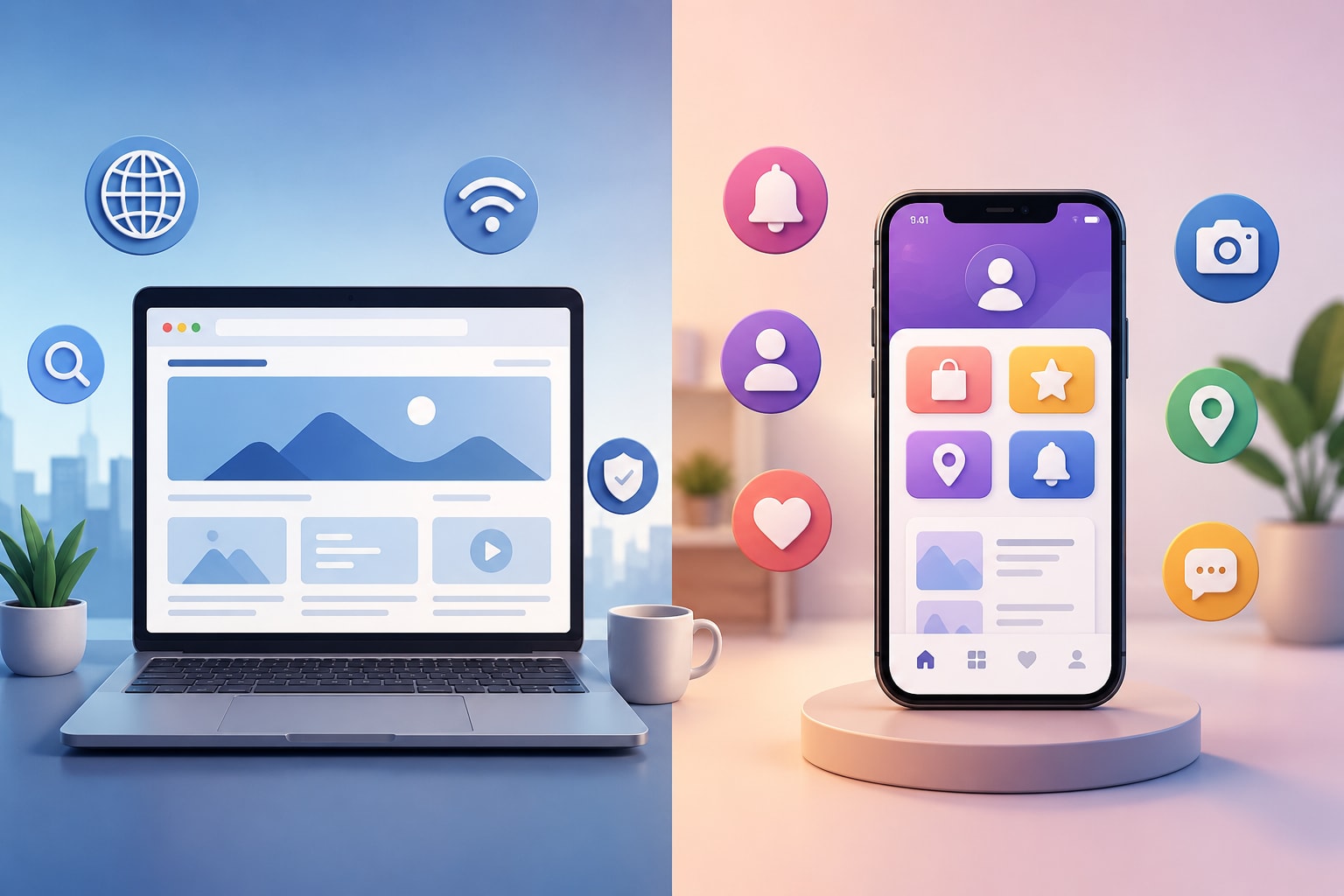
How are Mobile App and Website different?
What's the difference between Website and Mobile App?
Although both help businesses reach customers in the digital environment, Website and Mobile App are built with different purposes and uses.
Website is more accessible
Website only needs an Internet connection so users can access it through a browser without needing to install any additional applications. Customers just need to enter the domain name or search on Google to see information about the business, product or service.
This is also the reason why Website becomes an important foundation in SEO and Digital Marketing strategies.
Mobile App provides a convenient experience
Unlike a Website, a Mobile App needs to be installed on a phone or tablet before use.
Applications often have faster processing speeds and take advantage of many device features such as camera, GPS, push notifications, contacts or sensors. This helps businesses create a more seamless and personalized experience for users.
Ability to reach customers
Websites have great advantages in reaching new customers through Google. If SEO is well optimized, the website can appear when customers search for related products or services.
Meanwhile, Mobile App is often more suitable for customers who already know the brand and need to use the service regularly.
Investment costs
Normally, the cost of designing a Website will be lower than that of a Mobile App.
For mobile applications, businesses may need to develop separately for Android and iOS or choose cross-platform technologies to optimize costs. In addition, the application also needs to be updated periodically to be compatible with new operating system versions.
Long-term development ability
Website is an important foundation for building a brand, implementing SEO and reaching customers from many different channels.
Meanwhile, Mobile App is effective when businesses want to improve customer experience, build membership programs, send quick notifications or provide specialized features.