Microsoft and Elon Musk Accelerate the Race for AI Chip Autonomy: Efforts to Break Nvidia's Monopoly
The Artificial Intelligence (AI) industry is witnessing important turning points as giant technology corporations (Hyperscalers) shift their strategy from purely purchasing equipment to mastering the core technology themselves.
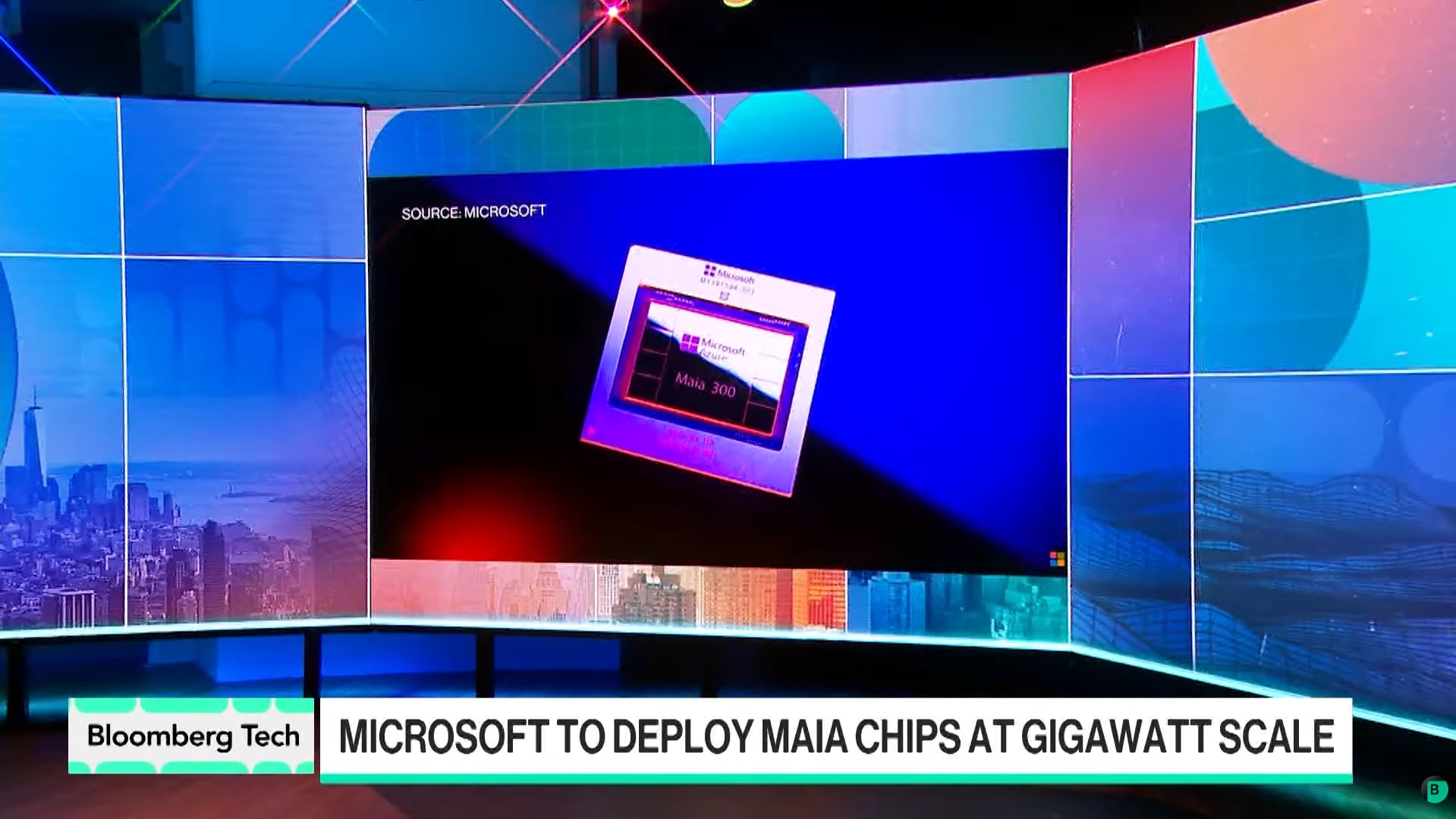
According to the latest report, Microsoft is preparing to deploy a self-developed AI chip line called Maya 300 on an extremely large scale (Multi-gigawatt scale) in its data centers starting next year. Unlike training large language AI models, the Maya 300 chip is specifically designed to optimize the inference process - that is, operate pre-trained AI models. Notably, Microsoft claims this chip line delivers 40% more tokens per megawatt of power performance than today's leading GPU systems. The corporation plans to use Maya 300 entirely for internal tasks such as Copilot and GitHub, while ceding the scarce supply of Nvidia chips to customer partners. This move not only helps Microsoft optimize operating costs (Total Cost of Ownership) but is also an important step in diversifying hardware supply.
Not stopping at Microsoft, billionaire Elon Musk is also laying the foundation for his ambition to produce microchips through the Terafab initiative. With the strategy of applying the Agile software development model to the hardware industry, Musk aims to test up to 10 new chip designs per year. Although experts consider this an extremely ambitious and risky goal to build from scratch, the investment of up to 16 billion USD in the Terafab factory shows Musk's determination to establish an independent supply chain for Tesla and xAI.
In another aspect of AI infrastructure, the problem of data center construction costs is becoming the focus of investors. According to analysis from Bloomberg Intelligence, the cost to complete a 1 Gigawatt data center in Texas (USA) has now reached $30 billion. This huge number not only includes server systems and chips, but largely comes from the escalating price of land connected to the power grid (Powered land), design costs, human resources and construction materials such as copper, steel and concrete. Limited supply of gas turbines for on-site power generation is creating delivery delays of 2 to 10 years.
Faced with the expansion of data centers, connecting hundreds of thousands of GPUs together requires advanced data transmission solutions. In order to remove this "bottleneck", Cisco has joined hands with Nvidia to launch the new generation optical connection standard USFP (Ultra-dense Small Form-factor Pluggable). This optical transceiver solution provides 4 times more bandwidth and is 1.3 times more energy efficient than previous generations, ensuring data is transmitted with extremely low latency without requiring a complete redesign of the existing data center architecture.
It can be seen that, while huge capital flows (Capex) continue to be pumped into the infrastructure sector, the return on investment (ROI) problem is forcing technology businesses to continuously innovate, automate hardware and optimize every kilowatt of power in the global AI supply chain.
Reference source: (2) Microsoft, Musk Race to Reinvent the AI Chip - YouTube | Bloomberg Tech