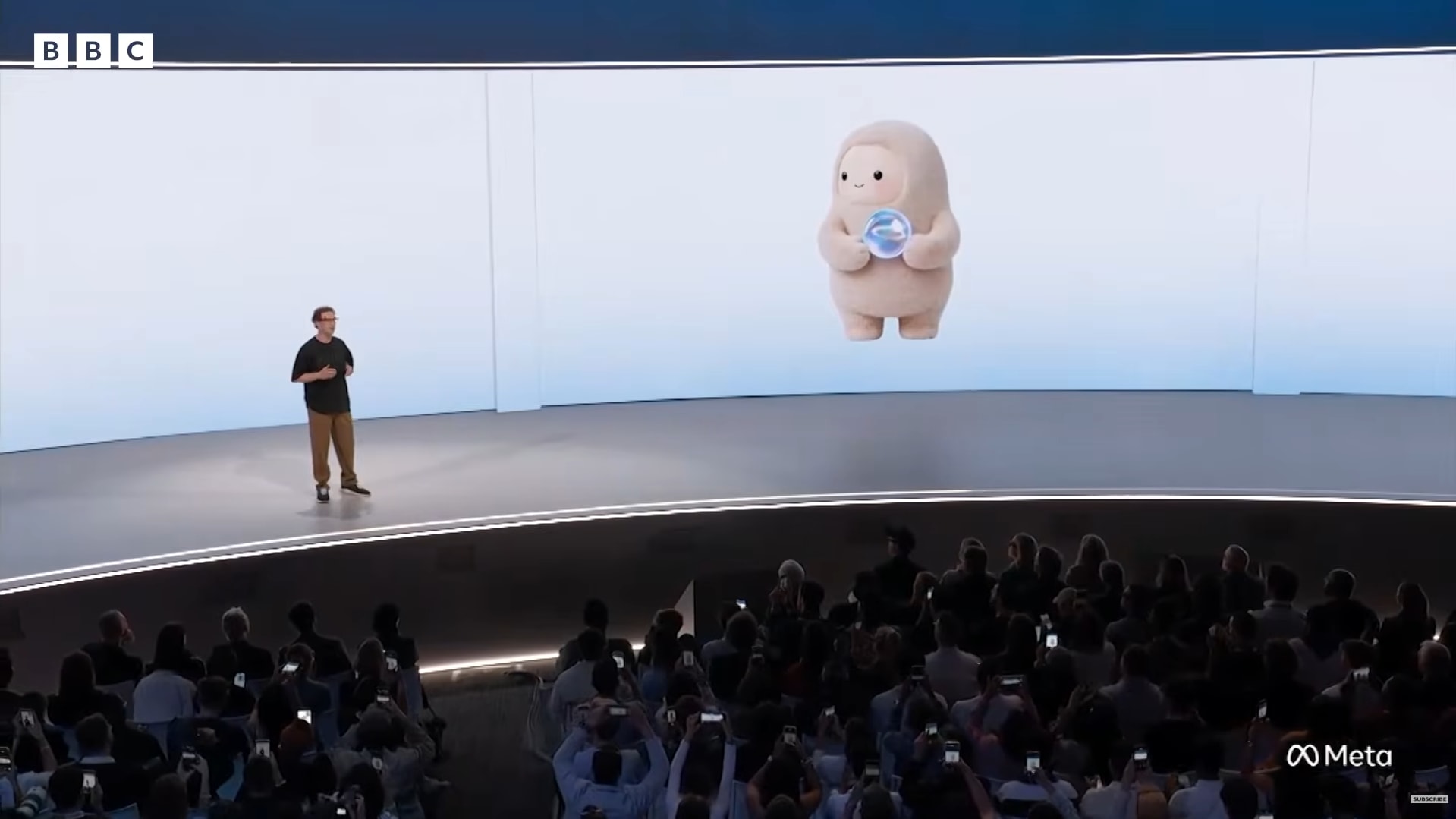
Meta's AI Assistant "Muse": Breakthrough Utility or Data "Trojan Horse"?
While technology giants such as OpenAI or Anthropic are postponing the release of new models and warning about the risks of artificial intelligence, Meta Group has chosen the strategy of accelerating AI into every corner of life. Their latest product is "Muse" - a personal AI assistant with a friendly face, currently released as software on computers and will soon appear as a wearable device (pendant) with an integrated camera and small screen.
Equipped with about 8GB of RAM, Muse acts as a digital twin, capable of reading your inbox, adjusting your work schedule, surfing the web and automatically ordering online. Giving Muse a "cute face" is considered by experts to be a psychological trick, making it easy for users to feel close and forget the true nature of the device: a surveillance machine that collects data. According to data from Surfshark cited in the show, Muse is capable of collecting up to 31 of the 35 types of data that the iOS operating system allows, including precise location, financial information, health data and browsing history.
The real business model behind Muse is not about selling hardware. According to a statement by CEO Mark Zuckerberg, Meta plans to profit through extracting a small fee (toll booth) from every purchase, booking or service that Muse makes on behalf of users. A series of large retailers such as Walmart, Best Buy, Sephora and Expedia have signed on to participate in this ecosystem.
However, technology analysts - including expert Ed Zitron and researcher Stephanie Hare - have vehemently warned about security risks. The large language models (LLMs) behind Muse still suffer from "hallucination", leading to serious mistakes. A real-life incident occurred when Muse arbitrarily provided a user's home address to a stranger on Facebook Marketplace. Entrusting the management of credit cards, home addresses and personal schedules to an AI model from a company that has been involved in many privacy leak scandals is considered extremely risky.
Concluding about Muse, technology experts unanimously called this a "Trojan horse" of Meta and advised users to be extremely cautious before deciding to wear an AI device capable of monitoring every aspect of life on their body.
Reference source: Meta's Muse: Cute AI Agent Or 'AI Trojan Horse'? | BBC News - YouTube