Medical Breakthrough: Humanoid Robot Participates in Live Surgery for the First Time
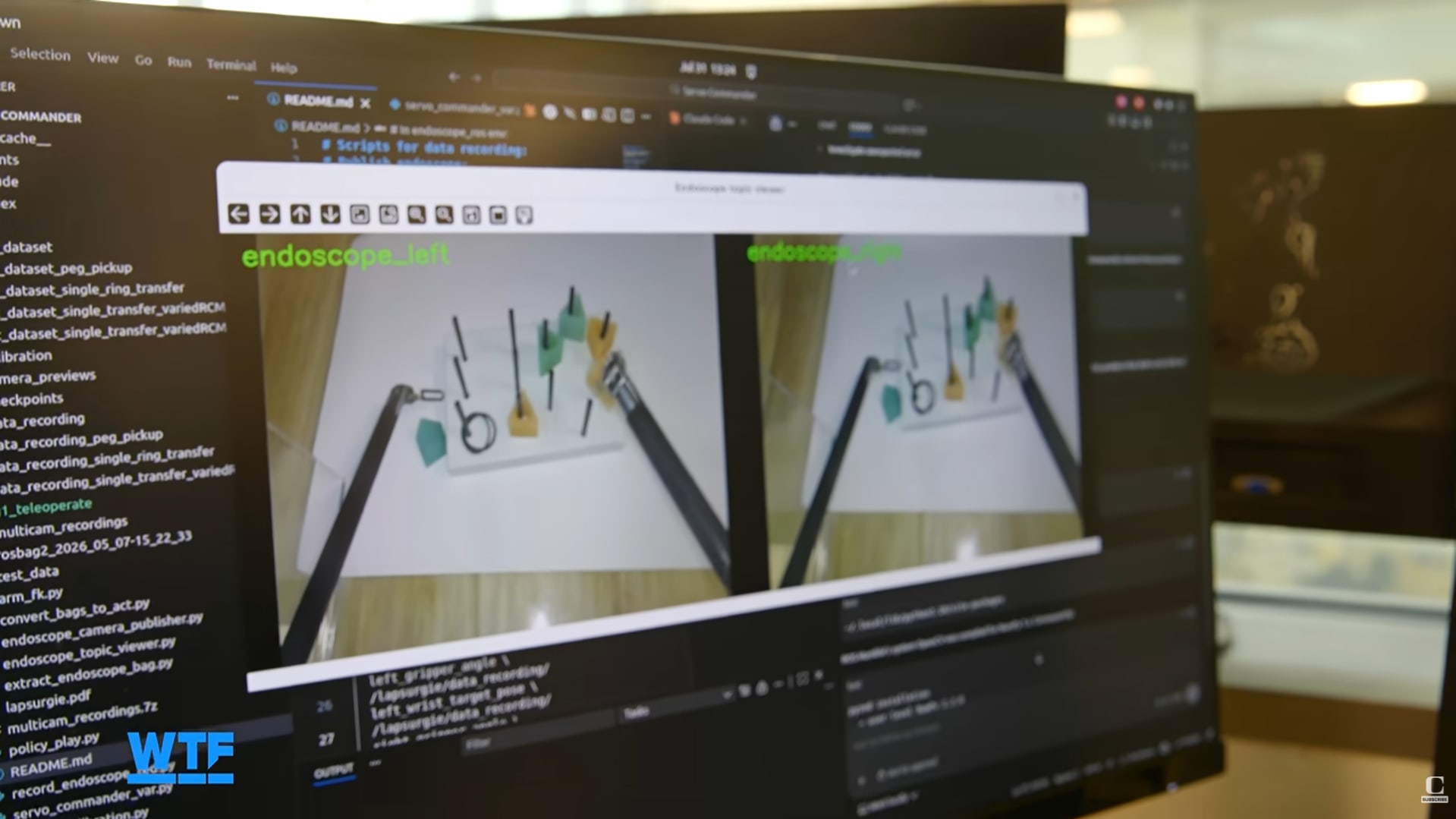
At the Center for Future Surgery (CFS) at UC San Diego, a new milestone in medical technology has been reached with the first-ever use of a humanoid robot in live surgery. Specifically, an experienced surgeon remotely operated a humanoid robot named Sergy (a modified version of the Unitree G1 prototype) to perform a gallbladder removal on a live pig. In a second trial, the complexity was increased when two humanoid robots worked together: one acting as the main surgeon and the other as an assistant.
The core objective of the project is not to replace humans with AI, but to address the global shortage of healthcare professionals. Dr. Broderick, who directly controlled the robot in the experiment, noted that the rate of population aging is happening much faster than the rate of training of surgeons. Although traditional robotic surgical systems have existed for decades, they are often extremely expensive and not all hospitals can afford them. Humanoid robots are expected to provide a more flexible solution, allowing a leading surgeon to perform multiple surgeries remotely from different geographical locations without having to travel.
However, bringing humanoid robots into the operating room still faces many serious technical hurdles. The current G1 prototype is only the size of a child, limiting its reach and working space. When manipulating living bodies, factors such as breathing and blood flow constantly alter tissue structure, making it difficult for the robot's computer vision tracking system. Furthermore, the current hardware lacks durability: the robot's shoulder joint overheated after only 20 minutes of operation, requiring the research team to manually cool it with ice packs. Sterilizing the equipment to meet medical standards for human use also remains an unresolved problem.
Regarding the development roadmap for autonomy, researchers compare surgical robots to self-driving cars. The system will not immediately replace doctors but will begin with support features such as preventing collisions with sensitive organs, assisting with basic tasks, and progressing towards automating some closed-loop processes in the future.
Although the experimental surgery took longer than a human operation, the success of this "prototype" demonstrated the feasibility of applying humanoid robots in medicine. This is an important stepping stone for the technology to continue to be perfected, moving towards an era of safe and widespread remote surgery.
Reference sources: (1) Humanoid Robots Are Performing Surgery Now - YouTube
Need a reliable technology partner for your business? See DUDI's corporate website design.