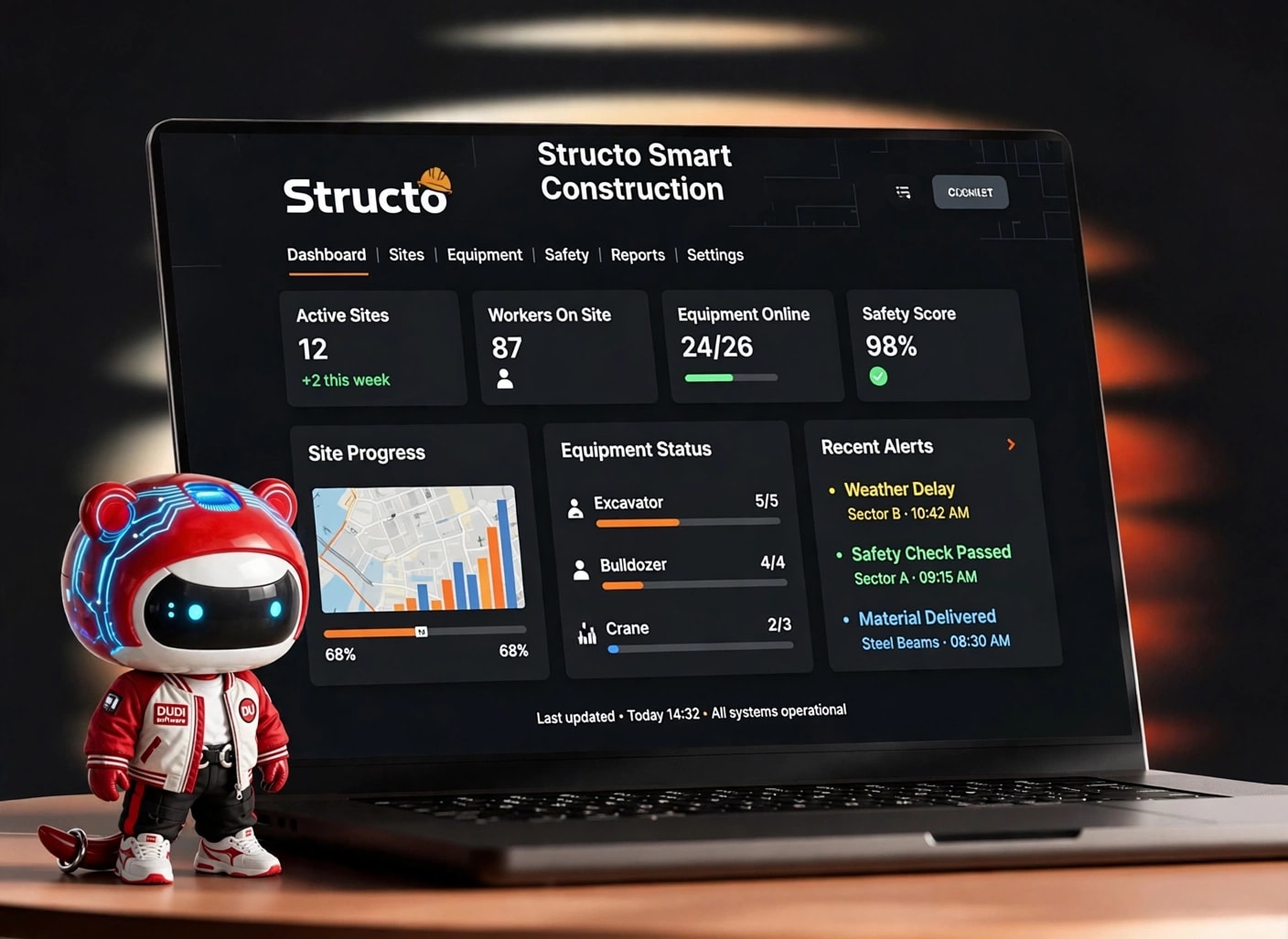
IoT Dashboard Platform Real-Time Solar Power Station Performance Monitoring
DATA CONGESTION AND LOSS OF FREE-RANGE POWER GENERATION
DUDI Software's partner is a renewable energy development company that manages a chain of 12 industrial rooftop solar power farms with tens of thousands of solar panels and hundreds of inverters distributed across the southern provinces.
The biggest challenge in operation is the completely passive monitoring of the equipment. Current, voltage, and temperature data from the inverters are only extracted manually at the end of the day via fragmented log files. When localized failures occur (such as solar panels being obscured by dust or inverters overheating and suddenly tripping), it often takes the technical team 24 to 48 hours to detect the cause. This downtime results in a significant loss of electricity output to the grid, causing hundreds of millions of dong in losses each month for the business.
BUILDING REAL-TIME ARCHITECTURE WITH MQTT AND TIME-SERIES DATABASE
Tasked with solving this operational problem, DUDI Software designed and implemented a sophisticated IoT Centralized Dashboard platform with a large-scale data stream processing architecture:
- Lightweight data collection via MQTT protocol: Instead of using cumbersome HTTP calls, we integrate the MQTT Broker communication protocol for all Gateway devices installed at substations. Sensor data is encapsulated in ultra-small packets and pushed to the central server every 5 seconds, ensuring stable transmission even in mountainous areas with unreliable 4G mobile network connections.
- Storage and analysis with TimescaleDB: Millions of records are loaded directly into the TimescaleDB database, optimized specifically for real-time data. The system automatically aggregates key performance indicators (PR) and instantaneous power generation without memory bottlenecks.
- Data visualization interface and automatic alerts: The central control interface, built with ReactJS and WebSockets, displays heatmaps and the real-time operating status of each solar panel array. Notably, the system integrates an anomaly analysis algorithm: when a performance difference between inverters exceeds 10%, the system automatically triggers an alert, sending instant messages via Telegram and SMS to the station's supervising engineer.
CONSERVING ELECTRICITY OUTPUT AND OPTIMIZING MAINTENANCE
The newly launched IoT monitoring platform has brought about a significant transformation for the energy industry:
- Rapid incident response: Hardware fault detection and resolution time reduced from 48 hours to under 15 minutes.
- Optimizing power generation: Reducing power loss due to inverter malfunctions by 92%, maximizing revenue from electricity sales to the grid.
Reduced maintenance costs: Engineers no longer have to blindly inspect each battery pack; the system accurately pinpoints the location of malfunctioning equipment, saving over 40% on field operation personnel costs.