From Mastering 5G Infrastructure to the Vision of Shaping Global 6G Technology
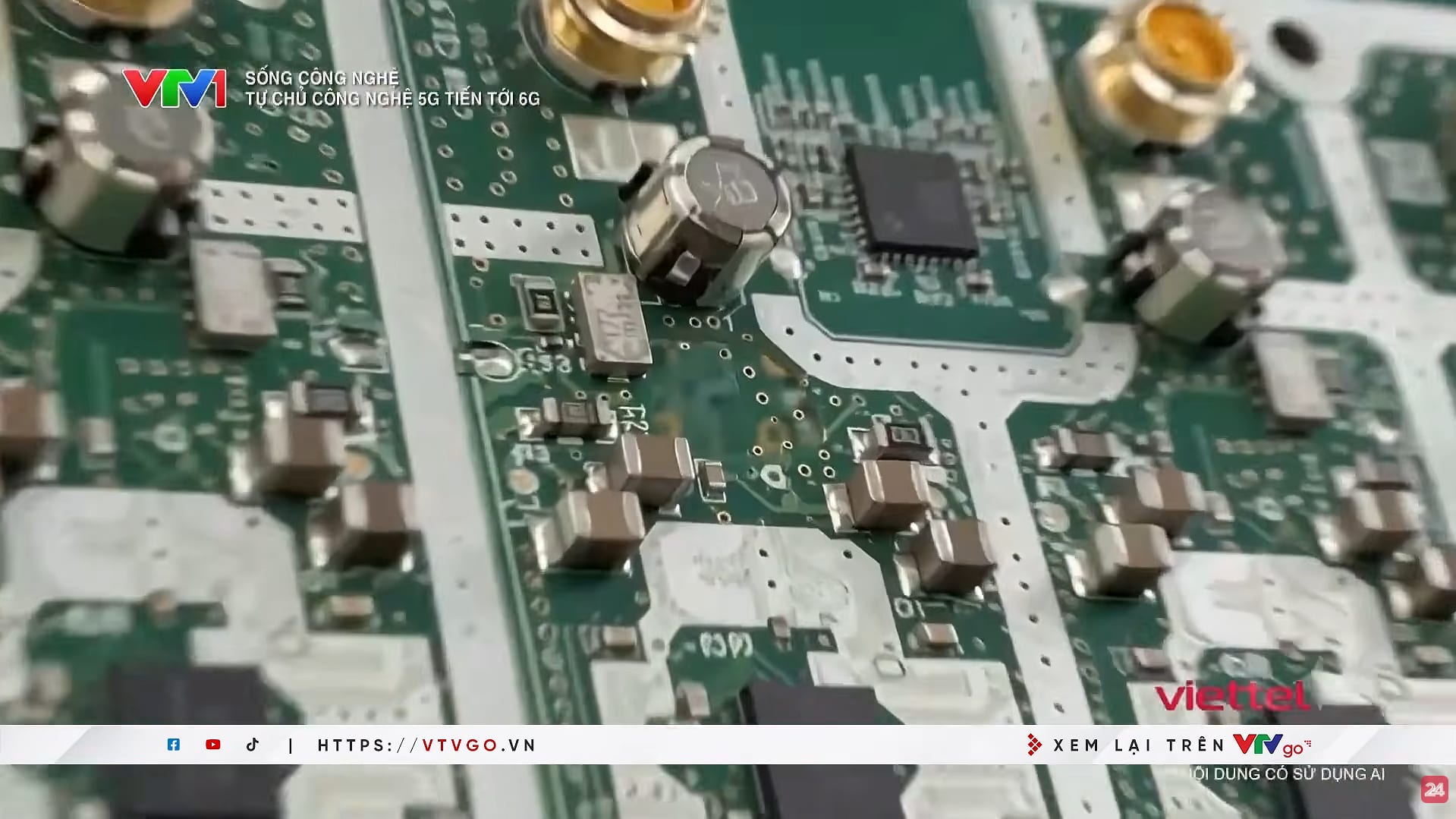
According to a report by VTV24, Vietnam has now mastered many core technologies and processes for designing and manufacturing modern 5G transceiver equipment. The process of creating a complete 5G circuit board involves many closed-loop stages, from tin plating and using automated production lines to attach components such as capacitors, resistors, and IC chips, to the tin melting process and error checking using software systems.
Mr. Hoang Manh Cuong, chief engineer for 5G transceiver system design at Viettel, shared that thanks to the experience gained from developing 4G base stations over the past 10 years, the question for 5G today is no longer "can it be done?". The biggest challenge is commercialization: mass production, ensuring stability, and optimizing costs.
Thanks to continuous improvements and the application of automated production lines, the failure rate of 5G devices is now controlled at below 5%. Before being commercially available, the final product must pass a series of rigorous tests such as airtightness, signal transmission and reception stability, and heat resistance.
Although the domestic technology sector has largely achieved self-sufficiency in its processes, core chipsets are currently still imported from abroad. However, with strong investment in the semiconductor industry, the domestic technology sector is expected to soon be capable of designing and manufacturing its own chipsets.
Self-reliance in research, testing, and production, which began in 2019, has significantly reduced Vietnam's dependence on imported equipment. Possessing the core technology of 5G provides a solid foundation for domestic engineers to collaborate with major global technology companies to test and demonstrate 6G-related technologies in the future.
Video source: Living Tech: Self-reliance in 5G technology towards 6G | VTV24.