IFA Berlin Exhibition: Wave of Devices Integrating AI and Robots Shaping the Future of Life
At the IFA consumer technology exhibition held in Berlin - one of the world's largest technology trade events, artificial intelligence (AI) and autonomous robots have become the absolute focus, present on most new generation product lines from nearly 2,000 exhibitors globally.
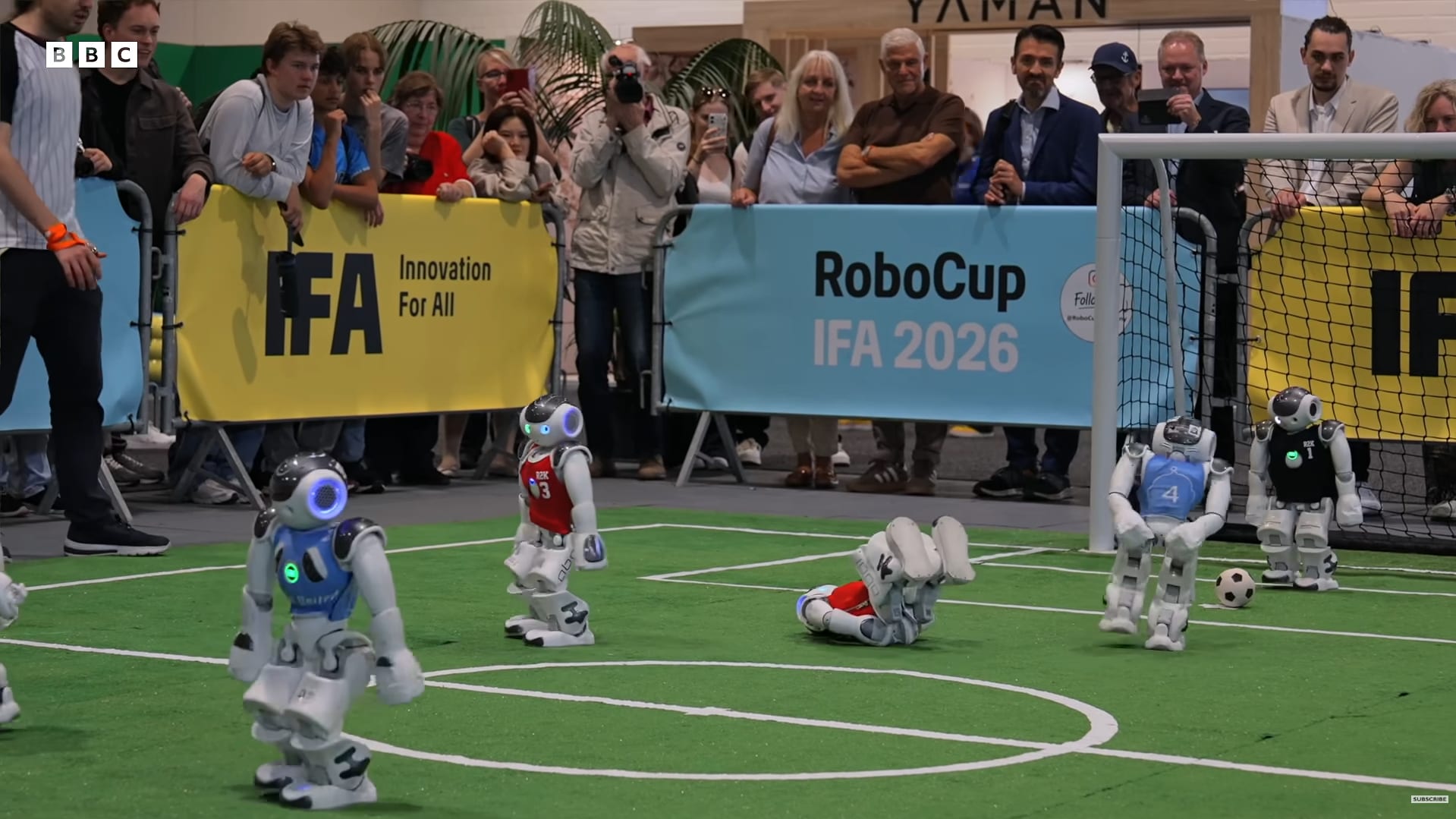
According to BBC News' reportage, the most notable shift at this year's exhibition is the introduction of AI from online software directly into hardware devices serving daily life. In the field of robotics, products not only appear in humanoid form but are also customized according to many sizes and practical functions. Typically, the compact M1 Zero robot model is equipped with a 3D space-scanning camera, capable of automatically setting up maps and conducting closed security patrols in the home. In addition, the soccer-playing robot systems at the RoboCup tournament also demonstrated the ability to coordinate mechanics and precise processing algorithms, paving the way for application to industrial chains as well as elderly care tasks in the future.
Not only stopping at household robots, the AI wave also deeply personalizes user experience through wearable devices (Wearable AI). Notably, the iicaros smart pin line integrates a camera and microphone to record the surrounding environment, support memory and answer the wearer's questions during the day. Similarly, the Plaud One headset has built-in 4G connectivity and an independent eSIM, allowing users to record, analyze conversations and interact directly with virtual assistants without depending on smartphones. In addition, the first appearance of large technology corporations such as Xiaomi committing to invest billions of dollars in an AI ecosystem combined with smart cars shows that the AI hardware race is entering a period of strong acceleration.
Despite bringing many outstanding benefits, the deep penetration of AI into the living space also raises major concerns about data security and personal privacy. The fact that devices are constantly recording and taking photos of living environments creates an urgent need for physical control mechanisms – such as the mechanical camera cover on iicaros – as well as algorithmic transparency to build consumer trust as technology crosses the digital boundary to be physically present in every home.
Reference video source: Gadgets of the future? | BBC News