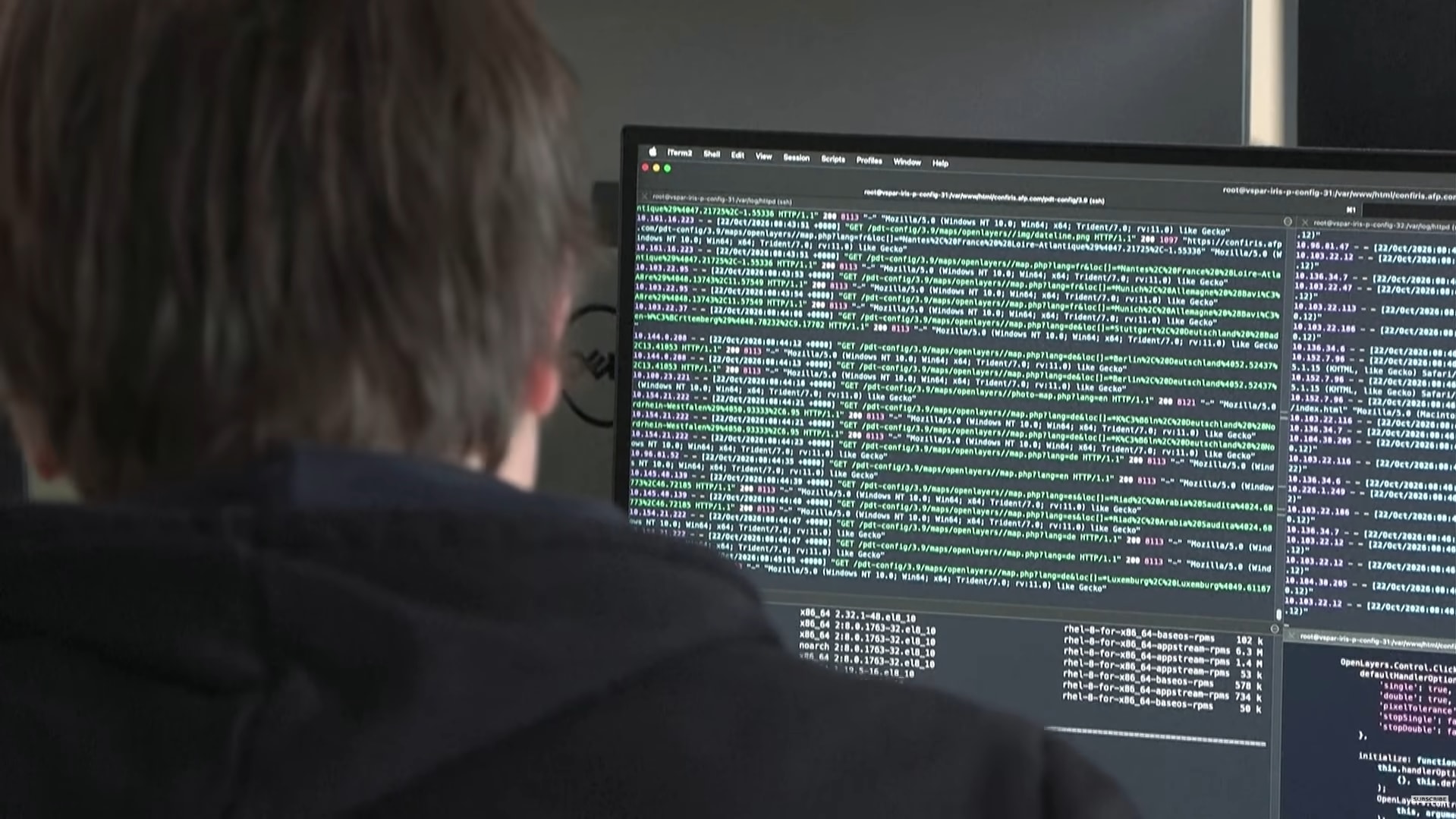
Global PHP Security Crisis: When Artificial Intelligence (AI) Is Both "Savior" and "Destroyer"
In recent days, a series of websites around the world - from Japan, Belgium, France, the Netherlands to the UK (including some BBC sites) - have simultaneously displayed error messages and automatically disconnected. However, according to cybersecurity analysts, this widespread network outage was not a direct result of a distributed denial of service (DDoS) attack, but a proactive "unplugging" measure to protect the system against the worst security disaster in recent years. This earthquake originates from the PHP programming language - the foundational tool that is running much of the global Internet ecosystem. However, what shocks the technology world the most is not only the severity of the vulnerability, but the paradoxical dual role of Artificial Intelligence (AI): Both as the savior that exposes vulnerabilities, and at the same time a destructive weapon in the hands of hackers.
The "Impossible" Vulnerability and the Intervention of Pioneering AI The story begins in early 2024, when the PHP Foundation - a non-profit unit responsible for maintaining the language's source code – dimly recognized a flaw in their coding system. However, after evaluation, engineers said that this was only a "theoretical" problem. They concluded that no human brain has enough computing power to chain together a series of complex operations to exploit that vulnerability. The problem was temporarily parked in the hope that it would permanently stay safe.
That complacency was broken when a coalition of security researchers from OpenAI, security company Calif and Wiz decided to use Frontier Models to retest the PHP system. With the ability to process billions of variables in a split second, AI has proven that what humans consider "impossible" can completely happen. AI has found an extremely complicated sequence of actions – "do step A, then B, C and D in a single order" – to successfully crack a website running PHP. Ryan Austin, an expert who has spent 20 years of his life researching PHP security, shockedly described this as "the most serious vulnerability I have ever seen". Exploiting this vulnerability is like a crook having a master key that opens the main door of a house, thereby freely walking inside the internal network, deploying ransomware and appropriating all sensitive data.
During this period, AI has excellently fulfilled the role of a "savior". It sees blind spots that humans cannot see, helping cyber defenders (Cyber Defenders) plan to release a secret patch before the underground world finds out.
Human errors and the Counterattack of "AI Hackers" This could have been a happy story about the positive power of Artificial Intelligence. However, the "perfect plan" was ruined by human carelessness. An anonymous hacker collected the leaked clues and posted a short video on social networks, revealing the first traces of how to crack PHP. The clip was like a spark thrown into a gunpowder warehouse.
Immediately, cybercriminal gangs around the world used their own AI tools to analyze the clip, deduce logic and reverse-engineer the entire complex attack chain that OpenAI had previously discovered. A fierce digital arms race has officially begun. BBC cybersecurity reporter Joe Tidy said the current situation is unprecedented chaos. Hackers use AI to scan and fire millions of automated attacks on target servers every day, while system administrators must race every minute to download security patches before hackers can break the door in.
"Unannounced Y2K Incident" and the Hidden Infrastructure ProblemRed warnings have been issued from leading cybersecurity agencies in the US and UK. Technology reporter Chris Vallance commented that the severity of this crisis is completely comparable to the famous Y2K disaster in the 2000s, but worse in that: It happened completely without prior planning.
The most difficult problem today for corporations and governments lies not in updating publicly displayed websites (Public-facing websites), but in the "Hidden infrastructure system". PHP is present everywhere, creeping into even the most unexpected systems such as control pages (Web Interface) of technical machinery management systems, energy control, and internal medical records. Many organizations don't even know that their core system is running on an outdated PHP platform that is no longer supported by updates and cannot permanently install new patches.
This PHP crisis event has gone far beyond the boundaries of a normal software error. It is a wake-up call for a new era of cybersecurity: Where Artificial Intelligence does not belong only to the righteous side. In a world where AI can help humans find vulnerabilities in 1 second, it will also help hackers weaponize that vulnerability in the next 1 second. The asymmetry in cyber power (Cyber Power) has been flattened, and the battle to protect personal data in the future will be a direct battle between "defender AI" and "attacker AI".
Reference Source | Is AI helping or harming cyber-security amid the PHP hacking attempts | Global News Podcast - YouTube