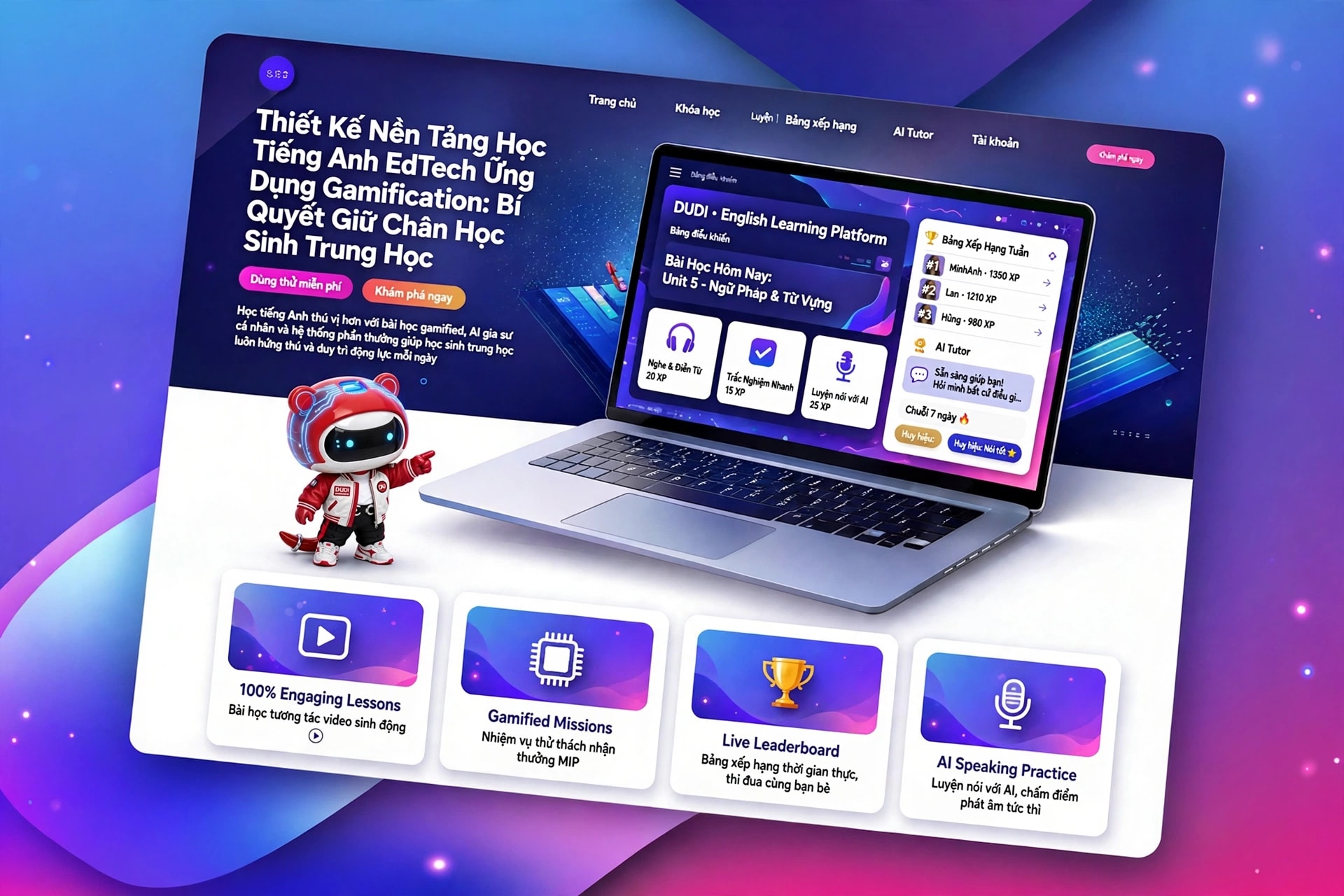
Designing an English Learning Platform (EdTech) Using Gamification: The Secret to Retaining High School Students
The educational technology (EdTech) market is witnessing a boom in online learning platforms. However, a major challenge faced by most traditional e-learning systems is the extremely high drop-off rate, especially among middle and high school students. Spending hours in front of a screen watching video lectures and filling out dry quizzes simply cannot compete with the intense appeal of entertainment games or social media.
The groundbreaking solution to this problem is to apply gamification directly to the core structure of the web-based learning platform.
1. Gamification in Learning Is More Than Just Using Fun Images. Many systems mistakenly believe that simply designing a colorful interface is enough to successfully "gamify" the learning process. In reality, gamification is the application of the psychological and logical mechanisms of video games to a non-gaming environment (such as learning English) to boost motivation.
A well-designed English learning platform based on Gamification (e.g., the Learnify/EngQuest model) must possess three core mechanisms:
- Experience Points (XP) & Leveling Mechanism: Students earn XP points by completing vocabulary exercises. Once they accumulate enough points, they "level up," similar to real-life role-playing games.
- Badges & Daily Quests System: Set challenges such as "Study continuously for 7 days" or "Complete the listening exercise with a perfect score" to stimulate the desire to conquer.
- Real-time leaderboard: Tapping into the competitive and self-motivated mindset of students, this helps them consciously review the material every day.
2. Solving Technical Problems with React and Node.js: For gamification mechanisms to work smoothly and create a sense of excitement for learners, the underlying technical architecture must be extremely robust. The experience will be completely ruined if a student answers a question correctly but has to wait 5 seconds for the web page to reload before the celebratory confetti-throwing effect appears.
- The power of React in the frontend: For building lightning-fast interactive components (like experience progress bars, treasure chest opening effects, or flip-up flashcards), the React library is the number one choice. React's State management mechanism allows the web interface to update scores instantly on the student's screen without reloading the page.
- Node.js and Express in the Backend: With thousands of students interacting simultaneously, competing in vocabulary contests, or submitting assignments, the server system needs excellent asynchronous processing capabilities. Node.js combined with the Express framework creates lightweight APIs that handle tens of thousands of simultaneous connections to add points, calculate rankings, and return results to the user interface in a flash.
- MongoDB offers flexible data: Achievements, inventory, and badges for each student are diverse data structures. Using MongoDB helps to optimally store student "personal" profiles, making them easy to query and upgrade with new features.
3. The Future of Educational Technology: Building a gamification-based English learning platform is not just about creating a website, but about creating an engaging experiential environment. When students view language learning as a journey to save the world or an adventure to conquer new vocabulary territories, acquisition will be completely natural and sustainable.
If your business is nurturing a groundbreaking EdTech project, choosing the right core technologies like React/Node.js and adopting a Gamification design mindset from the outset is key to dominating this promising niche market.