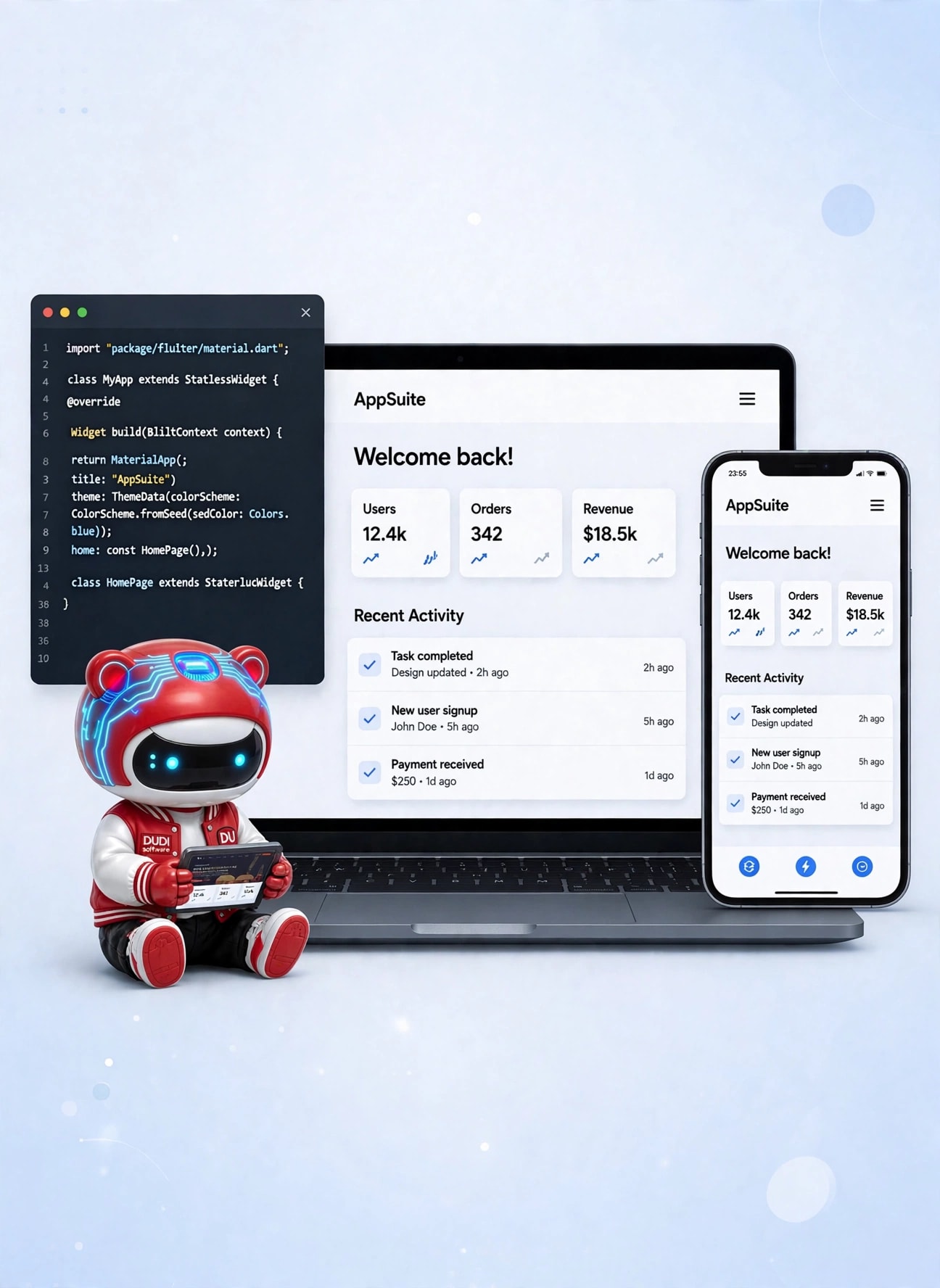
Multi-Platform Application Programming: Solution to Save 50% Costs for Businesses
In today's digital user acquisition strategy, owning a mobile application is a mandatory requirement for retail, financial, and service businesses. However, the biggest obstacle causing many projects to stall is cost. Traditional native programming methods require businesses to maintain two separate development teams: one for iOS (using Swift) and one for Android (using Kotlin). This leads to inflated budgets and a time-to-market delay that doubles.
The best solution to this problem is cross-platform mobile application development. By using modern frameworks like Flutter (developed by Google) or React Native (developed by Meta), software engineers only need to write the source code (codebase) once. The system will then automatically compile the application to run smoothly on both iOS and Android operating systems.
The benefits of cross-platform technology extend beyond simply reducing initial programming costs by 50%. During maintenance and operational upgrades, if a business wants to launch a new feature or fix a bug, the update will be simultaneously pushed to both the App Store and Google Play Store. This ensures absolute consistency in user experience (UX) and user interface (UI) across all devices.
With direct compilation architecture, cross-platform applications now achieve performance and processing speed almost equivalent to traditional native applications. Swipe and touch interactions, animation effects, and the ability to handle complex data are all handled perfectly, even for applications requiring high security such as e-wallets or enterprise resource planning software (ERP mobile).
Choosing to develop cross-platform applications is a strategic move that helps businesses optimize resources and quickly capture mobile market share.