The "Lightless Factory" Era in China: When Robots Produce Their Own Robots
China, a country once known as the "world's factory" with a huge manual labor force, is entering a historic transformation. Inside modern industrial parks, the concept of "dark factories" is gradually becoming the new standard. This is not production in the dark, but a term for fully automated systems, operating continuously day and night using artificial intelligence (AI) and robots without direct human intervention.
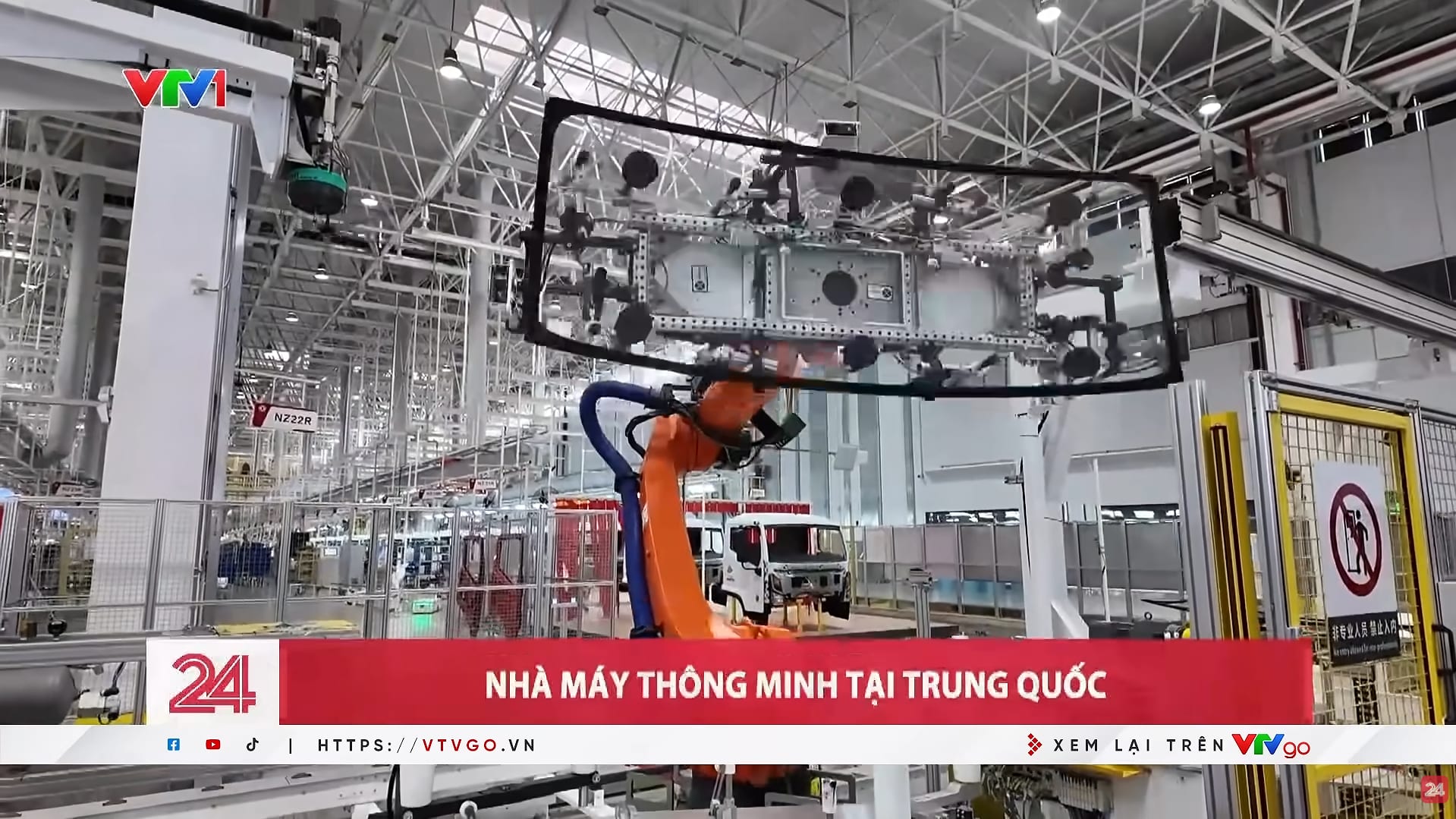
According to VTV24's reportage, the level of automation at these facilities is reaching unbelievable milestones. Typically at a light truck assembly plant, the automation rate in key stages such as stamping, welding and painting has exceeded 75%. With the support of more than 300 autonomous vehicles (AGVs), the system takes only 150 seconds to complete an assembly step, allowing flexible production of more than 600 vehicle models on the same line and shipping 220,000 vehicles per year.
More notably, in Guangxi, the first super smart factory to achieve the closed process of "robot manufacturing robots" has officially come into operation. Here, the system is coordinated by a comprehensive digital brain, where autonomous robots undertake the assembly, testing and operation of other industrial humanoid robots. On average, a complete robot leaves the line every 10 minutes, aiming for a capacity of 10,000 products per year.
To date, China has more than 56,000 smart factories, with the rate of AI application in production reaching 34.2% in just the first half of this year. It is expected that by 2030, the smart manufacturing industry in this country could reach a value of 158.2 billion USD.
However, the rise of machines is creating tremendous pressure on the labor market. According to research by Shanghai Jiaotong University, a series of repetitive jobs are disappearing. Of the displaced workers, about 40% had to return to agriculture and 57% had to move to areas with lower levels of automation to find work.
The biggest problem facing manufacturing businesses today is not only technology investment, but how to retrain the workforce. Instead of performing manual operations, humans will need to transition into positions of system monitoring, equipment maintenance, and algorithm management to survive in this fierce digital era.
Reference video source:(22) Inside "lightless factories", "robot manufacturing robots" in China | VTV24 - YouTube