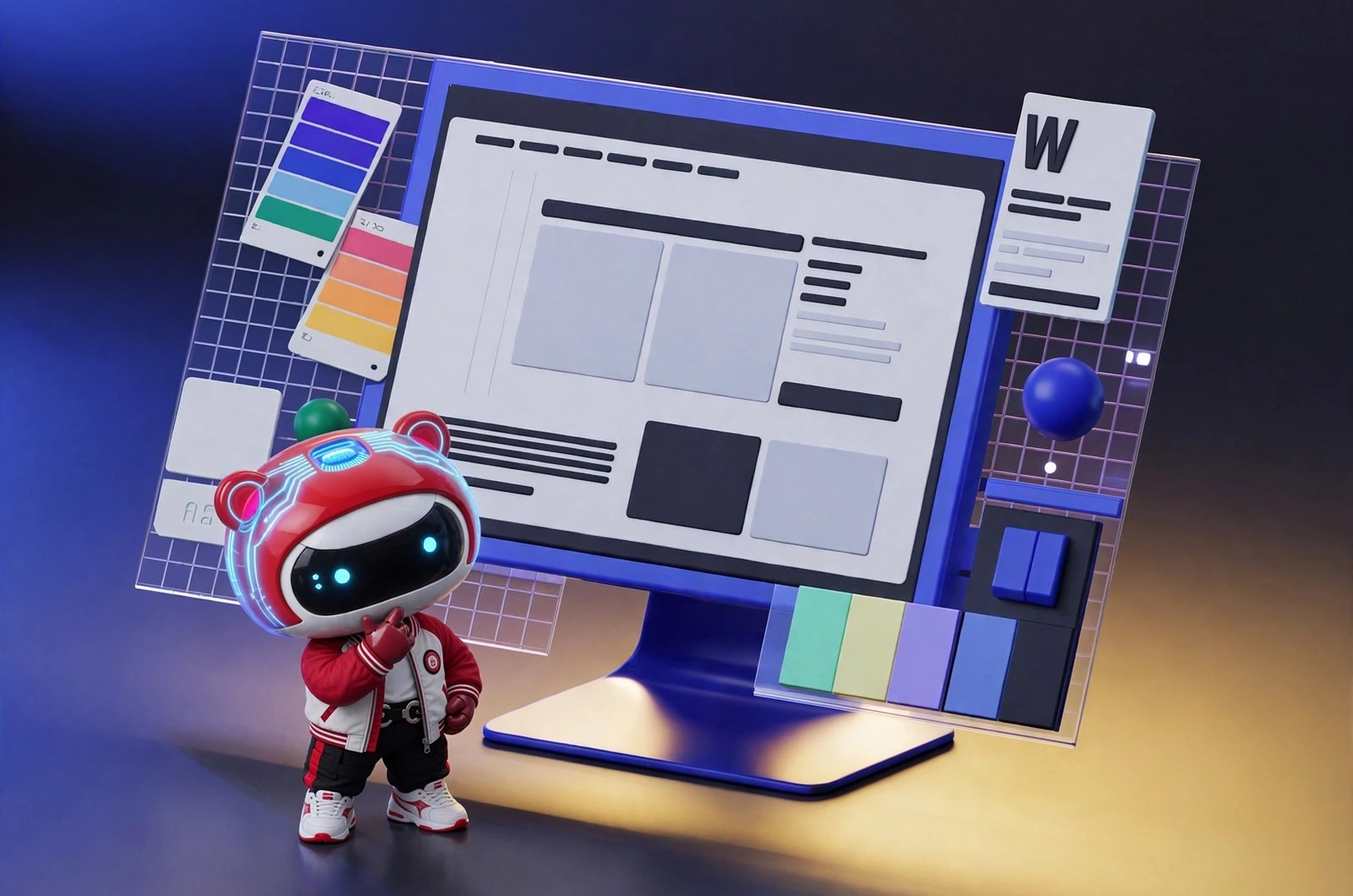
Application of Atomic Design and Design System in Multi-Industry Group Website Design
When a business develops into a group model (Group/Holdings) with a series of member companies, branches and different product lines, their digital infrastructure often falls into chaos. The parent company's website has one style, the careers page has another style, and the subsidiary's portal uses a completely mismatched color palette. Furthermore, every time the corporation wants to launch a new website, the programming team has to write the source code from scratch, wasting time and a huge budget.
To completely solve this scale problem, leading consulting and website design units no longer draw every single page. Instead, they built a "Design System" based on the Atomic Design methodology initiated by Brad Frost.
1. Interface Anatomy According to Chemical Structure Inspired by nature, the Atomic Design method in website design dissects a complex interface into 5 mutually inherited levels:
- Atoms (Atoms): Are the smallest components that cannot be further divided, including: Color code table, font (Typography), a single button (Button), an input box (Input field) or an icon (Icon).
- Molecules: A combination of atoms to perform a small function. For example: Combining an input box (Atom) + a button (Atom) + a text label (Atom) will create a complete "Search Frame" (Molecule).
- Organisms: Is a combination of many molecules to form an independent interface area. For example, the Header bar includes the Logo, Navigation Menu and Search Frame.
- Templates and Pages: Is the assembly of "Organisms" together into a skeleton layout and pouring actual data in to create the final website.
2. Synchronization Using Design Tokens and Storybooks The real value of this approach in B2B website design lies in its ability to "Codify" into a shared library. Design parameters such as brand color code, margin distance (Spacing), border-radius will be stored as variables called Design Tokens.
The engineering team will upload all programmed "Atoms" and "Molecules" to a centralized storage environment (like Storybook). When the corporation needs to build a new website for its 11th subsidiary, programmers do not need to rewrite the CSS code for each button or each table. They just need to access the library, drag and drop the thoroughly tested components and assemble them like a Lego game.
If the corporate leadership decides to change the brand identity color from Blue to Green, engineers only need to change a single line of code at the "Atomic" level. Immediately, hundreds of websites throughout the corporation's ecosystem will automatically update new colors in absolute synchronization in just a few seconds. This is the pinnacle of streamlining and optimizing long-term operating costs.